
Thanks for visiting!
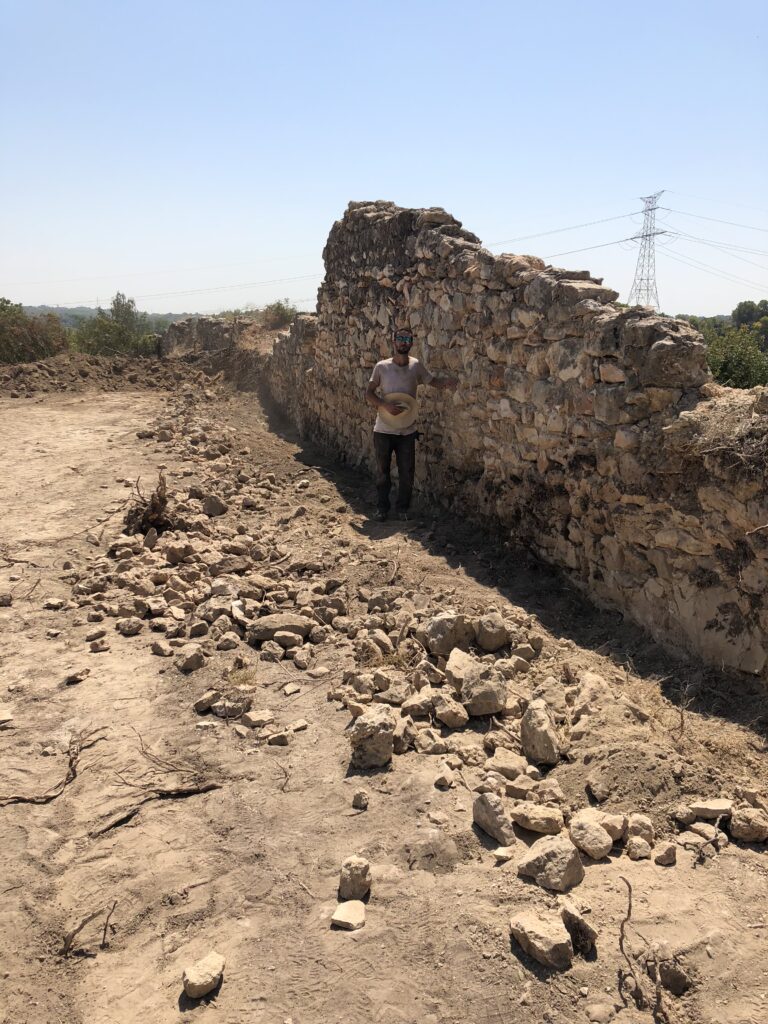
This website is part of my History Ph.D. dissertation at the University of Rochester, Treasure Excavations in the Medieval and Early Modern Hispanic World.
I study legal, inquisitorial, and criminal records that document authorized and illicit treasure hunting in Iberia and colonial Latin America.
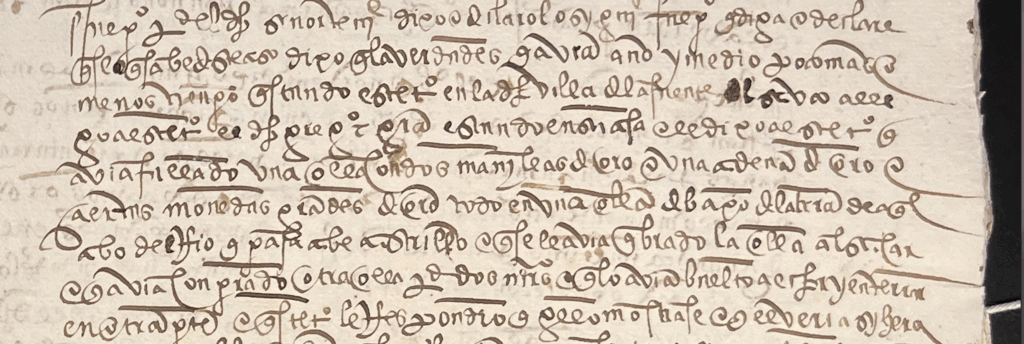
This work is supported by the Mellon-Meliora Digital and Interdisciplinary Graduate Fellowship at the University of Rochester. Please contact me with any questions: jbaron4@ur.rochester.edu.
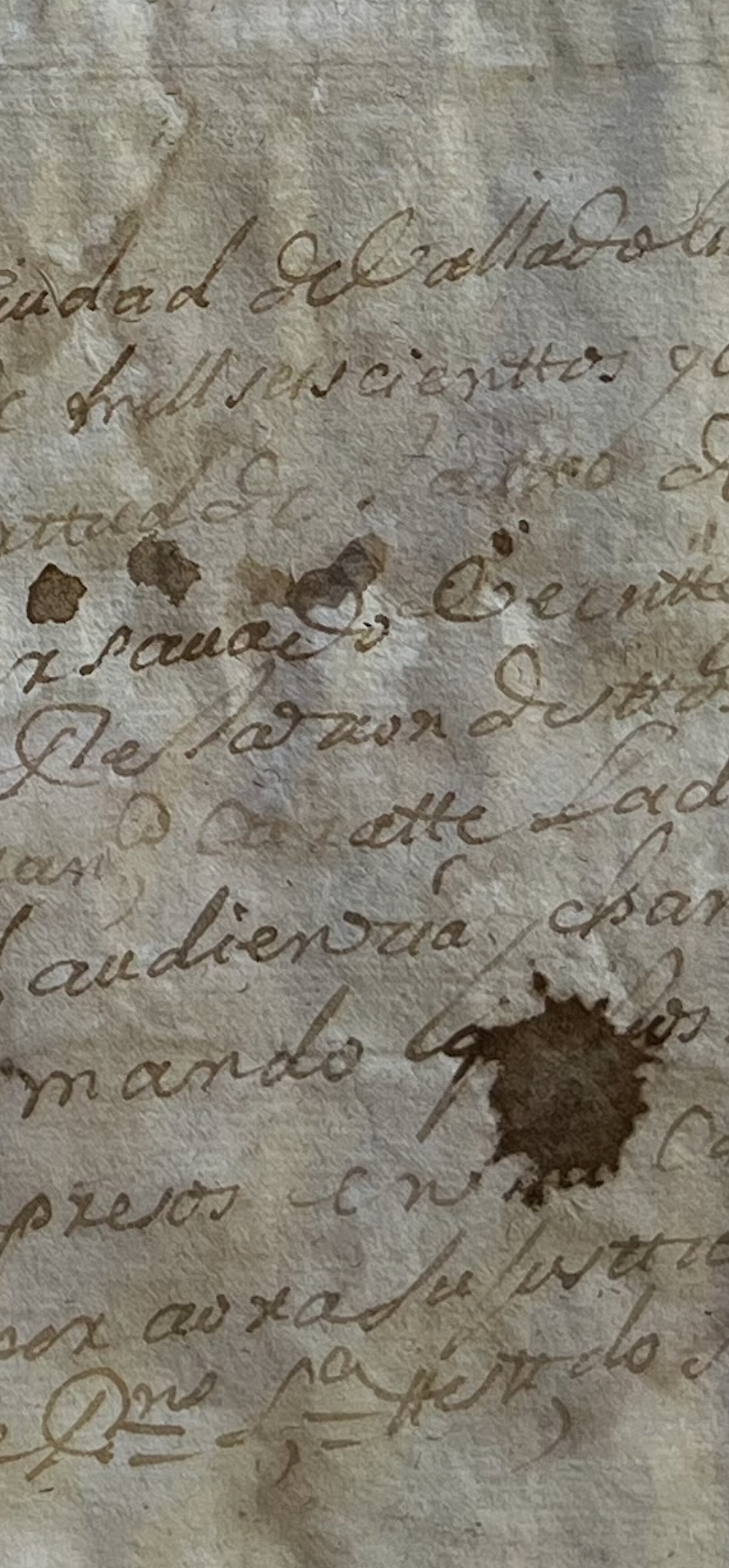
The word “treasure” today is usually associated with fantasy.
Mythical cities of gold, pirates, and buried treasure chests appear constantly in movies, television, and video games.
But for thousands of years, burying treasure was simply practical.
Let’s put buried treasure on a (very general) timeline of human history:
Some estimates put modern homo sapiens at about 300,000 years old.
We invent luxury objects like jewelry around 150,000 years ago.
Deliberately burying a valuable object can have religious significance, but it can also work like the premodern version of a bank account. We humans start burying our valuables around 30,000 years ago.
Quite a long while later, we start burying golden artifacts. That’s about 7,000 years ago.
But the quintessential treasure is a chest full of coins, right? Coins come about around 2,500 years ago.
This is also when our written record about buried treasure starts, and where my research as a historian begins.
As a historian, I have to work with what people have said and written about the past.
So I study the history of this word, “treasure,” rooted in Greek “θησαυρός / thēsaurós” and Latin “thesaurus,” that later becomes the English “treasure” and the Spanish “tesoro.”
For most of the common era, the word “treasure” (thesaurus) meant something very specific:
Julius Paulus, Opinions (c. 200 CE): “Treasure is an old deposit of money, of which the memory is no longer extant, so that it now no longer has a master.”
Juan de Solórzano Pereira, Politica Indiana (1647): “Treasure . . . refers to any money, gold, silver, jewels, or other precious movable items that have been placed or hidden in hidden places by owners from whom no news can be obtained.”
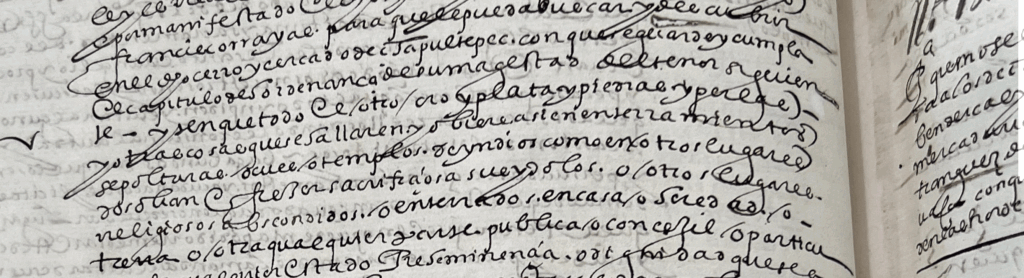
If you look up the definition of treasure today, you get something very vague and generic. That’s not really how it was in the past.
Treasure had a legal definition, and in many parts of the world, treasure law is still a thing today.
Say you find a gold wedding ring buried in the ground. It’s not just finders’ keepers.
Was it in your backyard? A local park? Federal land like a National Park? Somebody else’s backyard?
Each of those places falls under a different set of laws that govern what happens with your discovery—and the same was true in the past.
My dissertation is about all the legal documentation that surrounds discoveries and searches for buried treasure in the Spanish-speaking world.
In the archives, we see women and men, rich and poor, free people and the enslaved, Muslims, Christians, Jews, Indigenous Americans, Africans, and Afro-descended peoples all searching for and discovering buried treasures.
Sometimes they collaborated and shared profits, sometimes their knowledge and labor were exploited, each case is different.
“The money of sealed coins that was found in the said holes cannot be called treasure . . . because for that it would be necessary to concur that there was no memory of who had put it there, and the time so long ago that not even from the coins themselves could one know the minting of them. But . . . a short time ago they were hidden by Ynes Daça.”
Archivo Histórico Nacional, Consejos, 25809, Exp.12, Leg.3, fol. 12r.
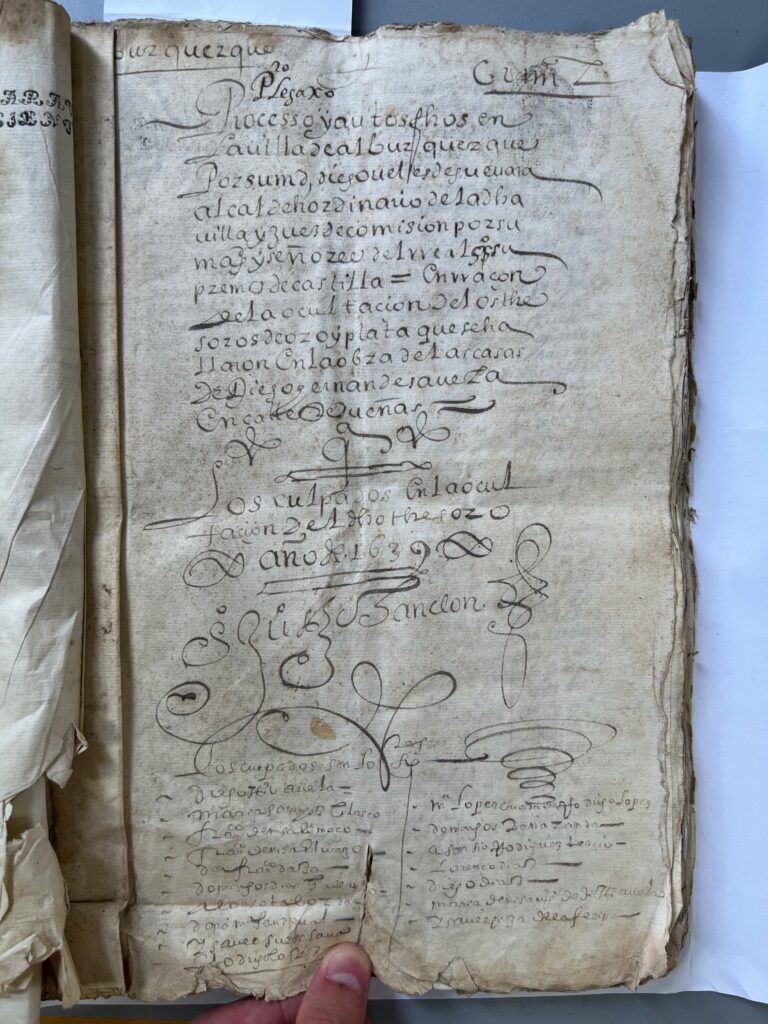
Treasure was a legal concern with a specific legal definition. Jurists struggled to decide how the laws that governed it should look, and how it should be managed by the government.
This was an activity that all kinds of people engaged in. Treasure hunting left us a really rich paper trail of licenses, laws, and legal suits that tell us about migration and cross-cultural interaction, about criminal justice and social networks.
The history of buried treasure is about more than fantasy. It tells us about the lived reality and aspirations of individuals who often appear nowhere else in the historical record.